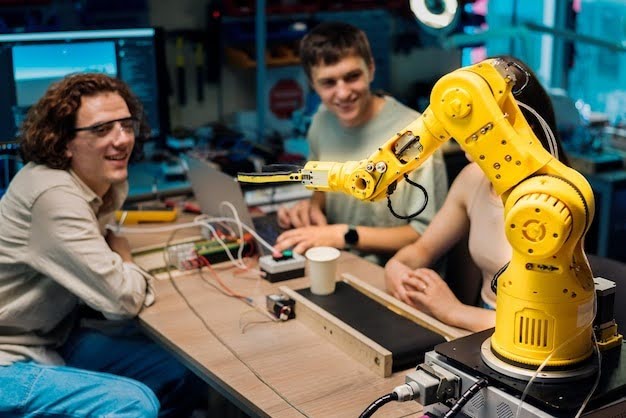
A well-prepared robotics team needs the right tools and components to design, build, test, and improve its robot. Having essential equipment available can make the building process more organized and give team members opportunities to develop practical technical skills. First robotics team kits can provide useful components that help students explore mechanical design, electronics, programming, and teamwork while working on robotics projects.
1. Robot Controller
The robot controller is one of the most important parts of a robotics kit. It acts as the main system that receives instructions from the team’s program and controls different robot functions.
A reliable controller allows team members to connect motors, sensors, and other electronic components while testing their designs. A complete kit can also help team members work together more efficiently by keeping important components in one organized setup.
2. Motors and Motor Controllers
Motors provide the movement needed for many robotic systems. Depending on the robot’s design, teams may use different types of motors for driving wheels, moving mechanisms, or operating attachments.
First robotics team kits often include motors and compatible controllers that allow students to experiment with different movement systems.
3. Sensors
Sensors help a robot collect information about its surroundings and internal condition. Common examples include distance, light, position, temperature, or motion sensors.
Adding sensors allows students to create robots that can respond to changing conditions rather than simply performing predetermined movements. Using different sensors can also give students practical experience with how robots detect and respond to their surroundings.
4. Structural Components
A strong frame provides the foundation for the entire robot. Teams may need metal or other durable structural pieces, brackets, plates, rails, and connectors to build the robot’s body.
These components allow students to create different designs and modify the structure as they test new ideas. These structural parts should be strong enough to support the robot while still allowing the team to make adjustments when needed.
5. Wheels and Drive Components
Wheels and drive components are essential for robots that need to move across a competition area or work surface.
Teams can select different wheel sizes and configurations depending on the movement they want to achieve. A properly designed drivetrain can improve stability and make the robot easier to control.
6. Gears, Belts, and Mechanical Parts
Mechanical components such as gears, belts, pulleys, shafts, and bearings can help transfer motion between different parts of a robot.
First robotics team kits may provide several of these components so students can experiment with mechanical systems and understand how changes in gearing can affect movement.
Final Thoughts
A complete robotics team kit should provide the essential components needed for mechanical construction, electronics, programming, movement, and testing. Controllers, motors, sensors, structural parts, wheels, mechanical components, wiring, batteries, programming tools, and basic equipment can all contribute to a successful project. By choosing first robotics team kits with suitable components and keeping equipment organized, robotics teams can spend more time designing, testing, learning, and improving their robots.