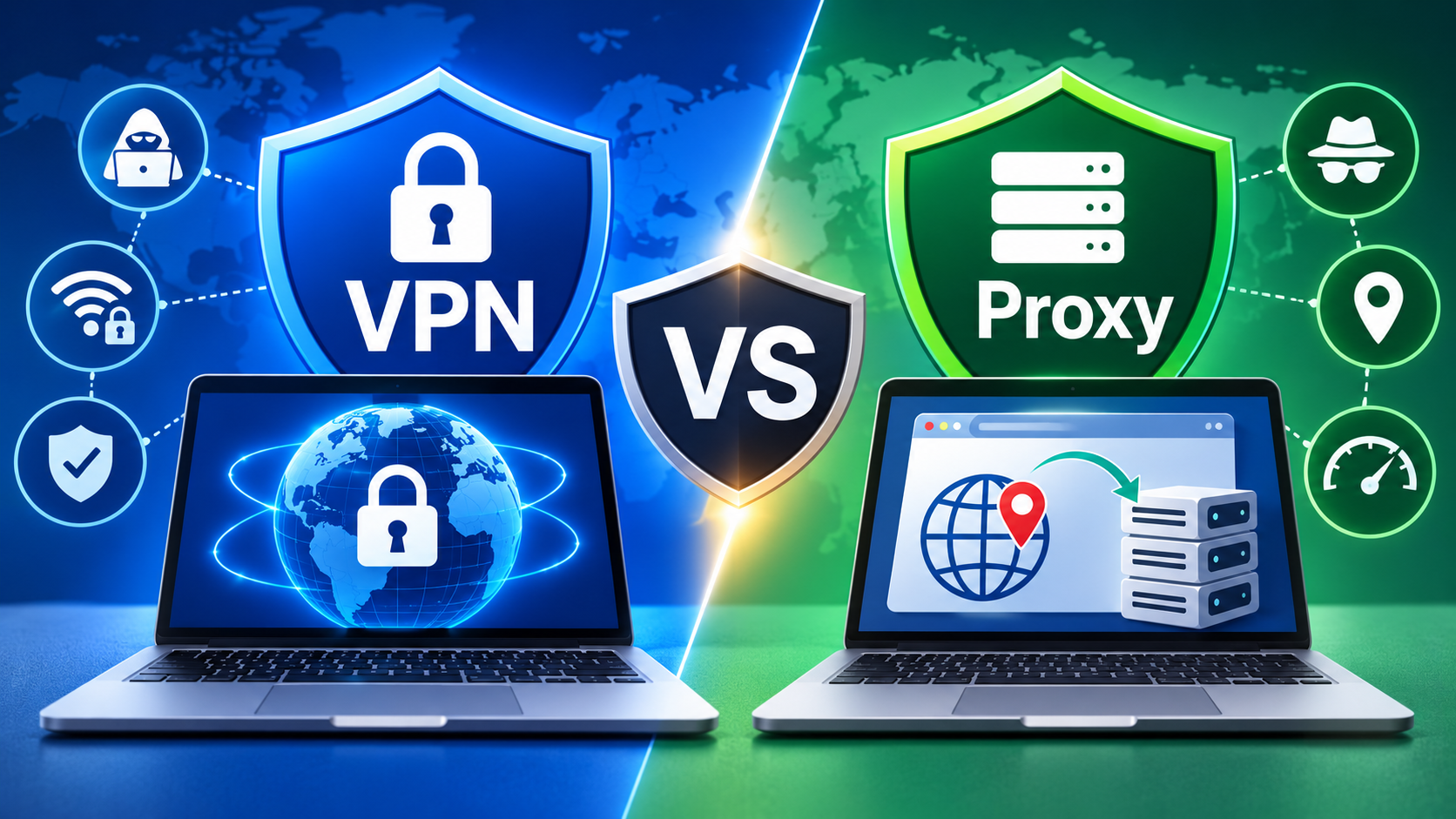
VPN vs Proxy privacy and security are important for the users of the Internet. There are many different methods people use to help secure their online use, conceal their IP address, and gain access to websites. There are two common technologies to use: Virtual Private Networks (VPNs) and proxy servers. Both can help you conceal your IP, but in different ways and to varying extents.
To get the safety and privacy you need, you may want to know VPN vs Proxy and how it differs.
What Is a VPN and How Does It Work?
A Virtual Private Network (VPN) is a technology that establishes a secure tunnel between your computer or device and the Internet. It secures your online information, making it more difficult for third parties, internet service providers, and hackers to track your online activity.
A VPN vs Proxy server encrypts your data when you use a VPN. The server masks your IP address and also utilizes its own IP address in its location.
The benefits of using a VPN are:
- Internet Traffic Protection: Secures your internet traffic from unauthorized access.
- IP Address Protection: Hides your real IP address.
- Public Wi-Fi Security: Offers extra security when connecting to public Wi-Fi hotspots.
- Online Privacy: Prevents third parties from following what you are doing online.
- Secure Browsing: Provides a more secure browsing session.
VPNs can be beneficial for individuals who utilize public Wi-Fi networks often, work remotely, or desire extra security when online.
What Is a Proxy Server and How Does It Work?
A VPN vs Proxy server is a server that sits between the server you are trying to access and your device. The internet request is redirected to the proxy server rather than going directly to the internet.
The proxy server makes a request on your behalf and returns the response from the website to your device. This can obscure your origin IP address from the target website.
The advantages of a proxy server are:
- IP Address Masking: Conceals the user’s real IP address from the website.
- Content Access: Can access some websites and/or some region-restricted content.
- All-in-one Web Filtering: Provides the organization with a centralized way to manage website access.
- Caching: Caching means storing frequently accessed content on some of the proxy servers to make it load faster.
- Basic Privacy: Offers some level of anonymity when using the Internet.
But most of the regular proxy servers won’t encrypt your internet traffic. This means that your information on the web could still be out there.
What Are the Main Differences Between VPN and Proxy?

While both VPN vs Proxy can help mask your IP address, they vary in terms of their security features and how they operate.
The following are the key distinctions:
| Features | VPN | Proxy |
| Encryption | Encrypts internet traffic | Usually does not encrypt traffic |
| Security | High security | Limited security |
| IP Address | Hides original IP | Hides original IP |
| Privacy | Better privacy protection | Basic privacy protection |
| Speed | May reduce speed due to encryption | Can be faster in some situations |
| Coverage | Protects device traffic through the VPN connection | Often works with a specific app or browser |
| Cost | Free and paid options | Free and paid options |
In general, VPNs provide more robust security due to additional protection mechanisms, which include IP address masking and encryption.
Which Is Better for Online Privacy and Security?
For those who desire more privacy and security online, a VPN is usually the preferred option over a proxy.
A VPN vs Proxy helps protect network traffic from being accessed by unauthorized users, and it encrypts all information data sent across the internet. This is a very helpful tool when on public Wi-Fi hotspots or when using personal information online.
The proxy server could be suitable for simple tasks like accessing websites using another IP address or handling web traffic. However, it should not be considered a complete security solution.
The preference will depend on the activity you perform online and the protection that you are looking for.
When Should You Use a VPN or Proxy?
Thus, the decision of which to use between a VPN and a proxy will come down to your requirements.
Use a VPN when:
- You want to secure important information on the Internet.
- You frequently connect to public Wi-Fi.
- Internet traffic must be encrypted.
- You want a higher level of privacy when you’re browsing.
- You work from home and get access to business information.
Use a Proxy when:
- It’s only necessary to hide your IP address from a website.
- You’re looking for simple browsing privacy.
- An organization requires Web filtering.
- You wish to monitor particular browser connections.
- Always stick with a trustworthy service, as some free VPN and proxy services may also capture or divulge user data.
Conclusion
The VPN vs Proxy comparison is something to consider if you’re concerned about online privacy and security. Both of these technologies are able to mask your original IP address, but they each offer varying degrees of protection.
A VPN vs Proxy will typically be a good choice, as it encrypts web traffic and secures a higher percentage of your device’s network activity. A proxy is generally not as secure as a VPN, but it can be used to mask your IP address and perform certain browsing activities.
If your priority is privacy and increased security while browsing, then a good VPN service is the better option.
Frequently Asked Questions (FAQs)
1. What is the main difference between a VPN and a proxy?
There is only one difference: encryption. Most proxy servers will only mask your IP address, but a VPN will encrypt your Internet traffic.
2. Does a VPN offer more security than a proxy?
Yes. A good VPN will have improved security, as it will encrypt internet activity and offer enhanced privacy.
3. Is it possible to hide my IP address on a proxy server?
Yes. One way to obscure the IP address of your computer is to send requests to another server through your proxy.
4. Does a proxy encrypt internet traffic?
The majority of proxy servers are not encryption-aware. Some specialized proxy services may, however, provide extra security options.
5. Is it possible to use a VPN in conjunction with a proxy?
Yes, both technologies can be used simultaneously, although this could make your connection more complicated and slow down the internet. For the majority of users, it is not necessary to use both.
6. VPN or Proxy for public wi-fi?
A VPN is typically more suitable for public Wi-Fi networks since it supplies encryption to shield your web traffic from unauthorized access.